How often should a hoist be inspected?

A hoist that lifts people, like a patient hoist, ceiling hoist, bath hoist or pool hoist, needs a LOLER thorough examination at least every 6 months. A hoist that only lifts goods, like a chain block or electric workshop hoist, needs one at least every 12 months. The slings, hooks and chains used with any hoist need examining every 6 months.
That’s the legal minimum under LOLER Regulation 9(3). A written examination scheme drawn up by a competent person can set different intervals, and for a hoist that works hard every day, it may well set shorter ones.
Hoist inspection intervals at a glance
Type of hoist | LOLER thorough examination | Why |
Mobile patient hoist | At least every 6 months | It lifts people |
Ceiling track or wall-mounted patient hoist | At least every 6 months, and after installation before first use | It lifts people, and its safety depends on how it’s fitted |
Standing (stand-aid) hoist | At least every 6 months | It lifts people |
Bath hoist | At least every 6 months | It lifts people |
Pool or spa hoist | At least every 6 months | It lifts people |
Patient slings | At least every 6 months, each one individually | They’re lifting accessories, and they lift people |
Electric or manual chain hoist lifting goods | At least every 12 months | It lifts goods only |
Lever hoist (pull-lift) | At least every 12 months | It lifts goods only |
Overhead runway or gantry with a hoist | At least every 12 months, and after installation before first use | It lifts goods, and its safety depends on how it’s installed |
Engine hoist or engine crane | At least every 12 months | It lifts goods only |
6 months if anyone rides on the platform, otherwise 12 | It depends whether it lifts people | |
Slings, hooks, shackles and chains used with any hoist | At least every 6 months | They’re lifting accessories |
Any hoist also needs examining again before it’s used after anything that could affect its safety, such as damage, a dropped load or a major repair (Regulation 9(3)(a)(iv)).
Patient hoists: the September 2026 safety alert
If you run a care home, nursing home, home care service or equipment loan store, this one’s for you:
On 16 September 2026, the MHRA issued a National Patient Safety Alert on patient hoists and slings of all types. It reports 22 deaths from hoist and sling falls reported to the MHRA between 2015 and 2025, an average of two a year. Providers have until 16 September 2027 to complete the actions, led by a senior accountable person.
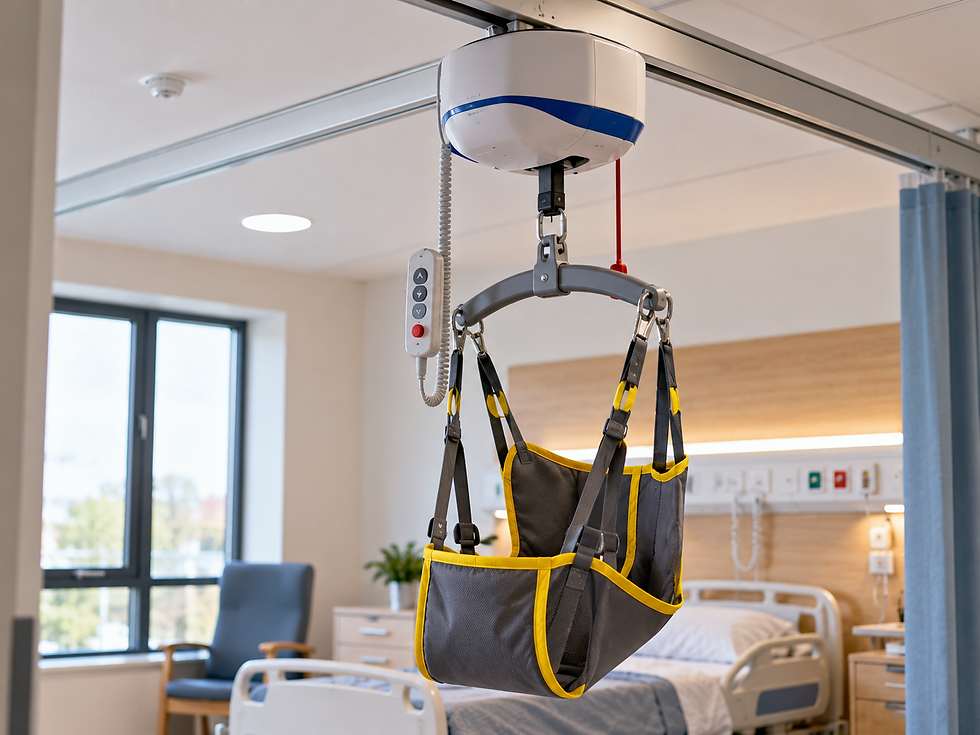
The alert asks providers to:
Use standardised pre-use checks, in line with the manufacturer’s instructions, including a pause once the load is taken to confirm the sling attachments are secure.
Check every hoist and sling combination is compatible, and keep a local register of approved combinations. Where third-party slings are used, a suitably qualified person has to verify and record compatibility.
Keep an inventory of every hoist and sling, including those out in people’s homes, with plans for maintenance, examination and replacement.
Keep maintenance, servicing and LOLER examinations up to date, with records, and take unsafe equipment out of service.
Train staff for their role, with regular updates and records.
On examinations, it’s clear: a thorough examination by a competent person is needed at intervals not exceeding 6 months, pre-use checks don’t replace it, and hoists with overdue examinations or unresolved defects must be removed from service. If your servicing is outsourced, the alert says you should be monitoring that the schedule is kept.
For care homes, this sits alongside CQC’s requirement that equipment is safe for its purpose and used safely. There’s more on that in our care homes guide.
Slings: the part that gets missed
So every sling needs:
its own thorough examination at least every 6 months, as a separate item from the hoist
a label you can read, showing its safe working load and an identification number, so it can be matched to its examination record
checking before every use, for fraying, cuts, worn stitching, damaged loops or clips, and a faded or missing label
to be taken out of use straight away if it fails any of those, and kept aside until it’s been examined or replaced
Washing matters too. Slings that are laundered often wear faster, so follow the manufacturer’s washing instructions and keep an eye on the label.
Workshop and site hoists
Outside care, hoists turn up in garages, factories, warehouses, farms, theatres and on building sites. The rules are the same principle: 12 months for the hoist if it only lifts goods, and 6 months for the chains, slings, hooks and shackles used with it.
A few things catch people out:
Fixed overhead runways and gantries need examining after installation and before first use, as well as periodically, because their safety depends on how they’re fixed to the building.
The hook block and bottom hook are part of the hoist, but any sling or shackle hung from them is a separate lifting accessory with its own 6-month date.
A hoist that’s ever used to lift a person, even “just this once”, needs the 6-month regime and has to be designed for it. Most workshop hoists aren’t.
If you’ve got a garage, our garages and MOT centres page covers engine hoists, jacks and axle stands. For slings, chains and shackles, see our lifting tackle inspections page.

Is a hoist service the same as a LOLER inspection?
No, and this is the most common mix-up we see, especially with patient hoists.
A service is maintenance. The supplier or a maintenance company cleans, adjusts and replaces worn parts, and it comes under PUWER. A LOLER thorough examination is a separate legal check by a competent person, who writes a report saying whether the hoist is safe to keep using. HSE says the examiner should be “sufficiently independent and impartial”, so not the person checking their own servicing.
Some suppliers do both on the same visit. That’s allowed, but check your paperwork says “thorough examination” and covers what LOLER requires, rather than just “service”.
What a hoist examination covers
On a typical patient hoist, I’ll be looking at:
the boom or spreader bar, mast and chassis, for cracks, wear and distortion
the lifting actuator and any straps or tapes on ceiling hoists
the sling attachment points, hooks or clips and their safety catches
the emergency lowering and emergency stop
the controls, handset and battery
the brakes and castors on mobile hoists
the ceiling track, its fixings and end stops on fixed hoists
the safe working load marking
each sling, separately
Hoist inspections across Nottingham and the Midlands
We examine patient hoists, slings, pool hoists and workshop hoists for care homes, home care providers, housing associations, garages and factories across Nottingham, Derby, Leicester, Loughborough and Lincoln, and out to Newark, Mansfield and Grantham. We also travel anywhere in the UK.
Every examination is carried out and signed by me, Ryan Leavesley MSOE MBES, an engineer surveyor with over 14 years’ experience. We don’t sell, hire or service hoists, so nothing we find is a sale. Every hoist and every sling gets its own written report, and we contact you before each examination falls due. Once we’ve agreed a price, it stays fixed for all your ongoing examinations.
Working through the patient hoist alert? Send us your hoist and sling list and we’ll come back with a fixed quote for getting everything examined.
FAQs
How often should a hoist be inspected under LOLER?
At least every 6 months if it lifts people, such as a patient, bath or pool hoist, and at least every 12 months if it only lifts goods. Slings, hooks and chains used with any hoist need a thorough examination at least every 6 months.
How often should hoists and slings be formally inspected?
Both at least every 6 months where they’re used to lift people. Each sling is examined as a separate item from the hoist, with its own record. Both should also be checked by the user before every use.
How often should a patient hoist be serviced?
Follow the manufacturer’s instructions for servicing, which is maintenance. That’s separate from the LOLER thorough examination, which must happen at least every 6 months. Some suppliers do both on one visit, but check the paperwork says it’s a thorough examination.
What is the 2026 patient hoist safety alert?
A National Patient Safety Alert issued by the MHRA on 16 September 2026, NatPSA/2026/005/MHRA. It covers falls from patient hoists and slings, and asks care and health providers to complete actions by 16 September 2027, including compatibility checks, an equipment inventory and up-to-date LOLER examinations.
Does a ceiling hoist need a LOLER inspection?
Yes. It lifts people, so it needs a thorough examination at least every 6 months. Because its safety depends on how it’s installed, it also needs examining after installation and before it’s first used.
How often should a chain hoist be inspected?
At least every 12 months if it only lifts goods, under LOLER Regulation 9. The chains, slings, hooks and shackles used with it are lifting accessories and need examining at least every 6 months. Check it before each use too.
Can a hoist be used if its LOLER examination is overdue?
It shouldn’t be. LOLER requires the examination at the set intervals, and the MHRA’s 2026 alert says patient hoists with overdue examinations or unresolved defects must be removed from service. Get it examined before it’s used again.

Comments